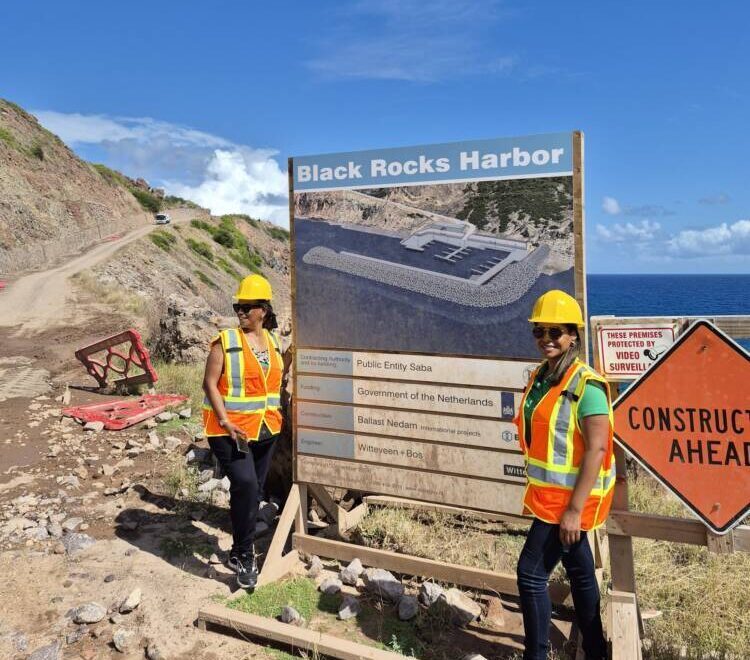
For students from Sint Eustatius (Statia) and Saba, choosing whether to pursue further education in the Netherlands or the United States is shaped by a complex mix of personal and practical factors. In this three-part series Caribbean Network explores the study experiences of students from the smallest islands of the BES – Statia and Saba. Part 1 focuses on the experiences of students who graduated at the CVQ level, which is comparable to the Dutch Secondary Vocational Education (MBO, Middelbaar Beroepsonderwijs).
As a resident of one of these islands and a parent familiar with the English-based education system used locally – the Caribbean Secondary Education Certificate (CSEC) and the Caribbean Vocational Qualification (CVQ) – Hazel Durand took a closer look at the academic journeys of these students.
Interviews with students at different stages of their academic paths, including current students abroad, recent graduates, first-year college students, and those who have temporarily returned home, show that this journey is rarely easy.
Recurring factors
Although individual circumstances vary, three recurring factors strongly influence students’ choices: language barriers, differences in education levels and pathways, and financial considerations.
On Statia every year between August and January at least 20 students leave to pursue their studies abroad. On Saba it’s at least 10 per year.
CVQ Student Experience: The Netherlands
Based on feedback from the students who graduated at the CVQ level, many encountered significant challenges in finding suitable follow-up programs, whether in the Netherlands or the United States. These difficulties often resulted in delays of several years in their academic progress.
One such student is Angelo Maharaj from Statia, who currently lives in the Netherlands. Angelo initially planned to continue his studies in the United States, but due to the high cost, he chose the Netherlands instead. His goal was to complete a bachelor’s degree within four years. However, three years later, he is still searching for the right academic path and has had to restart the same program, Marketing Communications, this time taught in Dutch rather than English.
When Angelo first moved to the Netherlands, he did not speak Dutch fluently. Over time, he learned that proficiency in Dutch opens far more educational opportunities than English-taught programs alone. Reflecting on his experience, he shared: “Today, I speak Dutch with everyone, including my teachers. I’ve realized that I barely use English anymore. Sometimes I even forget English words but remember them in Dutch. While it feels like I’m losing my first language, I’m gaining another, and right now that’s a major advantage.”
CVQ Student Experience: The United States
Unlike Angelo, who had the option to choose between studying in the Netherlands or the United States, Ishn Courtar, also from Statia, initially hoped to pursue his studies in the Netherlands. However, he graduated at a lower CVQ level, which prevented him from entering the program or institution of his choice there.
Following the MBO pathway in the Netherlands would have required approximately eight years for Ishn to complete a bachelor’s degree. Faced with this lengthy trajectory, he chose an alternative route by taking the General Educational Development (GED) exam, which enabled him to gain admission to a university in the United States. Ishn is currently in his first semester of a four-year bachelor’s program in Communications.
Community college
A similar experience was shared by Saba student Alejandro Benders, who graduated from high school at the CVQ level and later also completed the GED exam. Despite being advised that Dutch institutions generally do not recognize the GED, Alejandro applied to several schools in the Netherlands but was ultimately not accepted.
He then chose to continue his education in the United States, where he first attended a community college for two years to strengthen his academic level before transferring to a university to pursue a four-year bachelor’s degree in Automotive Studies. Recently, however, Alejandro’s study financing was terminated. He is currently working while completing his final semester online and is funding this himself at a total cost of approximately USD 6,000.
Part 2: Transitioning
In Part 2, which will be published Tuesday, February 24 2026, Durand highlights the experiences of CSEC students transitioning to the Netherlands to study in English-taught Hoger Beroepsonderwijs (HBO) programs, while navigating limitations related to education levels and academic pathways.