The US attack on the oil tanker Belma last week, which according to Curaçao was illegally sailing under a Curaçao flag, draws attention back to the abuse of Caribbean ship registrations practiced by the international shadow fleet.
(The term ‘shadow fleet’ (or ‘dark fleet’) refers to a network of ships, often old and uninsured, that use hiding tactics – such as, for instance, the illegal use of flags – to dodge strict environmental regulations, as well as international sanctions and tariffs – Ed.)
Tougher legislation
While the Netherlands is working on tougher legislation to take action against this, State Secretary Eric van der Burg (Kingdom Relations, VVD) cannot yet confirm whether there is a specific investigation within the kingdom into how many times the flags of Curaçao, Aruba, and Sint Maarten are being misused in this context. This is what he told Caribbean Network in connection with the US attack.
According to the US Central Command (CENTCOM), the ship was sailing under the flag of Curaçao in the Strait of Hormuz heading toward the Iranian oil export island of Kharg. After the tanker reportedly ignored multiple warnings, a US warplane fired Hellfire missiles at the smokestack, disabling the ship.
Fake flag
Almost immediately, the government of Curaçao denied that the ship Belma was legally sailing with a Curaçao flag. According to the country, the ship is not registered in Curaçao’s ship registry, and Curaçao has no oil tankers under its flag.
In the statement, the government points out the fact that ‘matters related to the nationality of ships, flag registration, and international maritime legal relations within the Kingdom of the Netherlands are a Kingdom matter.’ Therefore, according to Curaçao, any potential investigations into the abuse of registrations or illegal flag use fall under the competent Kingdom authorities.
Shadow fleet
The tanker Belma is no stranger in the world of the shadow fleet. Furthermore, it fits into a broader pattern of ships constantly changing identities to dodge sanctions. From a reconstruction done by Caribbean Network based on international ship registries and sanction databases, it became clear that in recent years the ship changed names, owners, and flags several times.
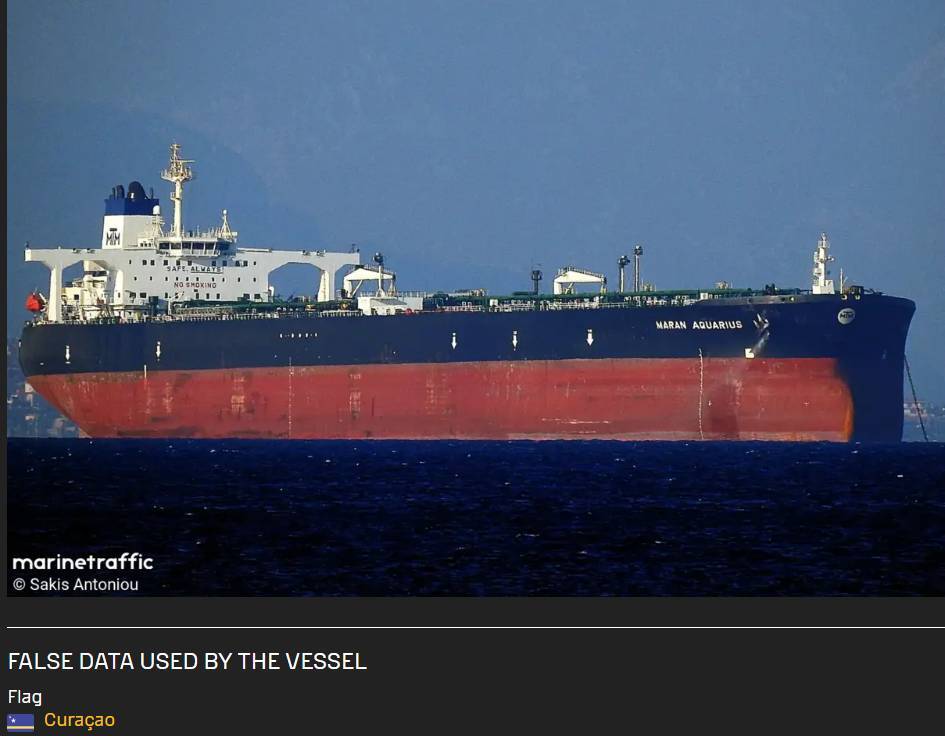
Previously, it sailed under the names Aquarius Voyager, Maran Aquarius, Leonor, and Bendigo, and it was registered consecutively in, among others, the Bahamas, Panama, the Cook Islands, and Barbados, before finally being identified as sailing under a Curaçao flag – which Curaçao authorities denied immediately.
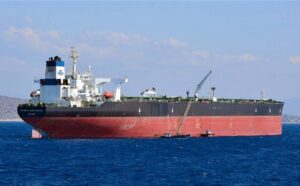
‘Maran Aquarius’, alias ‘Belma’ (Photo Nektarios Papadakis)
Even before the attack, the ship was already on several international sanction lists and in sanction databases. Ukraine points this ship out as part of the shadow fleet being used to transport Iranian oil outside of sanction regimes. According to the databases of the Ukrainian government, the US already sanctioned the ship in October 2024 due to ties with the sanctioned company Max Maritime Solutions FZE and the transport of Iranian oil through schemes to dodge sanctions.
Additionally, the attack on the ship Belma came precisely at a moment when the Netherlands wants to make dealing with the shadow fleet stricter. Just last July 10, the Dutch Council of Ministers agreed to a legal change that was urgently sent to the Council of State for advice. This should make it easier for the Netherlands to act against ships dodging sanctions or sailing under a fake or incorrect flag.
Abuse of Caribbean registrations
The case surrounding the ship Belma fits into a broader context of abuse of Caribbean ship registrations. From previous research by the investigative journalism platform Follow the Money, it turned out that dozens of ships from the Russian shadow fleet are using registrations in the Caribbean part of the kingdom.
In a clarification to Caribbean Network, investigative journalist Jesse Pinster indicated that his research found more than 50 tankers with Sint Maarten registration, roughly 35 with Curaçao registration, and 1 with Aruba registration. He also emphasized that different maritime databases contradict each other on this point, and that part of the registrations attributed to Curaçao might actually fall under Sint Maarten.
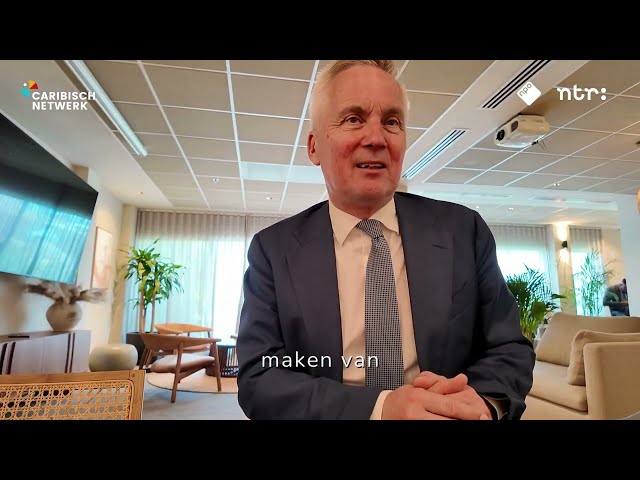
In connection with this, Caribbean Network asked State Secretary Van der Burg whether there is an investigation within the kingdom into how far the shadow fleet is abusing registrations from Curaçao, Aruba, and Sint Maarten.
 Watch on YouTube (opens in a new tab)
Van der Burg thinks it is good that Curaçao immediately clarified that Belma was not a Curaçao ship. “They were illegally sailing under a fake flag, as it is called, in this case under the flag of Curaçao. It is very good that Curaçao did this, because otherwise the impression could have arisen that it was a ship from our kingdom that was helping the Russians and dodging sanctions as well,” he said.
‘Foreign Affairs’
To the question of whether the Dutch government is investigating how far the shadow fleet is making misuse of registrations from Curaçao, Aruba, and Sint Maarten, Van der Burg (who is from Interior Affairs and Kingdom Relations – Ed.) answers that he cannot make statements about that. “I don’t know right now – because this falls under Foreign Affairs – if specifically on this point there will be an investigation into illegal sailing under the flag of Curaçao, Aruba, and Sint Maarten.”
He does emphasize however that, in the meantime, the Netherlands is working on measures to handle the shadow fleet more severely. “We are extremely active looking at how we could affect the shadow fleet economically, limit it, and make sure it cannot abuse fake flags or use opportunities to make money illegally,” he indicates.