“On the night of June 7 to June 8, 2025, around 3:00 AM, a spontaneous and insane shootout breaks out in front of the door of Club Rush. Never before in the history of Bonaire has such an unprecedented scene taken place, Wild West style, with so many shots, in front of so many people out enjoying the night, and with such disastrous consequences.”
With those words, prosecutor Daan Smits of the Public Prosecution Service brought the court back to the moment when in a matter of seconds the center of Kralendijk turned into a place where no one seemed safe anymore.
Raining Rounds
It is late at night. A fight that started in front of the door of Club Rush draws a lot of bystanders. Suddenly, two shots ring out in a northerly direction. A fraction of time later, a hail of bullets erupts. Not one, not two, but dozens. In about a minute and a half, 56 shots are fired. People run. Others look for a place to hide. The street turns into a chaos of firearm violence.
Then fifteen-year-old Clayshanou Domacassé falls to the ground. The boy who went out for a night on the town isn’t coming home anymore. According to Smits, it is almost unimaginable that more people were not killed that night. “It is a miracle that there were no more deaths,” is the core of his argument.
Then Grief Turns to Revenge
But according to the Public Prosecution Service, the story does not end with the death of Domacassé. Shortly after the teenager was shot, his brother allegedly made a conscious decision, according to the Public Prosecution Service: revenge. According to the prosecutor, a plan was hatched to go after young men from the group in the Nort di Saliña neighborhood and kill them. Subsequently, the pursuing group gets into a Toyota Vitz and drives off toward Nort di Saliña. There, firearm violence rings out once again.
Shots are fired from the car. A bullet hits a young man in his back. With that, what started at Rush as an explosion of violence gets a continuation, according to the Public Prosecution Service: a targeted search for revenge.

Reconstruction
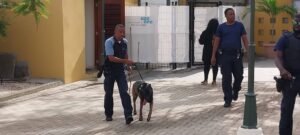
Afterward, the police try to reconstruct the suspects’ route. Phones are investigated. Wi-Fi connections and cell towers are examined. Camera footage is placed alongside digital data. According to the Public Prosecution Service, that data indicates that several of the suspects were likely in Nort di Saliña around the relevant time. But a phone doesn’t say who pulled the trigger. Ultimately, the court must deduce that from the totality of the evidence.
And that is precisely where the case file gets complicated. Forensic investigators were only able to secure a portion of the 56 shell casings from the shots fired in about a minute and a half for comparative analysis. Furthermore, not all of the firearms allegedly used that night were found. That missing piece is important. Because to convincingly connect a shell casing to a firearm, you need the gun itself for comparative testing.
So, the court has a massive file regarding the amount of violence used, but not a complete forensic trail for every single shot.
The Violence Goes Further Back in Time
As if the file were not extensive enough already, a previous shooting in the neighborhood of Amboina on January 11, 2025, also became part of this case. Shell casings were secured there as well. The NFI (Netherlands Forensic Institute) investigated the ammunition and compared shell casings from different locations.
According to the Public Prosecution Service, there are similarities between the shell casings from Amboina, Rush, and Nort di Saliña. A scenario in which the same Glock was used in different shooting incidents is being presented as probable. In this way, justice is trying to tie different moments together. But the existence of a connection isn’t the only thing the court must ultimately determine. The main question is which suspect played which role.
The Public Prosecution Service places the heaviest responsibility for the death of Domacassé on G.O. and the minor J.W. According to prosecutor Smits, they are guilty of complicity in the homicide.
The Public Prosecution Service’s stance is that J.W. fired the fatal shot. At the time of the shooting, he was 15 years old – the same age as Domacassé. The Public Prosecution Service requested one year of youth detention and a 2-year PIJ measure (Placement in a Youth Institution). The sentence requested against him is based on juvenile criminal law.
Against G.O., who is now 19 years old, the Public Prosecution Service requested 24 years in prison. Against the other suspects, varying sentences were requested, depending on the acts they are suspected of, according to the Public Prosecution Service.
The Prosecutor’s Message
For Smits, ‘Galápagos’ is more than a criminal case against ten suspects. He sees the case as a moment where Bonaire must pause and think about where the island is headed. According to the prosecutor, the court’s verdict could partially shape the future of Bonaire. Will this be the end of a very violent period of fatal firearm violence? Or will the island slowly keep sinking into a situation where, time and again, another fatal victim falls in a shooting? Those words put undeniable weight on the decision that Judge Eline Groenendaal must make shortly.
But a court does not convict based only on societal fear. The court must weigh the evidence for each suspect, and that evidence is complicated. Camera footage can show the chaos, but not every bullet. Shell casings can sometimes be examined, but not when many weapons have disappeared. Phone data can reconstruct movements, but it doesn’t automatically prove who fired. That is where the core of ‘Galápagos’ lies.
One night, 56 shots. A fifteen-year-old boy dead. Afterward, according to the Public Prosecution Service, an act of revenge heading toward Nort di Saliña. Now, the questions that ultimately only the court can answer: who did what, and who can be held criminally responsible for it?
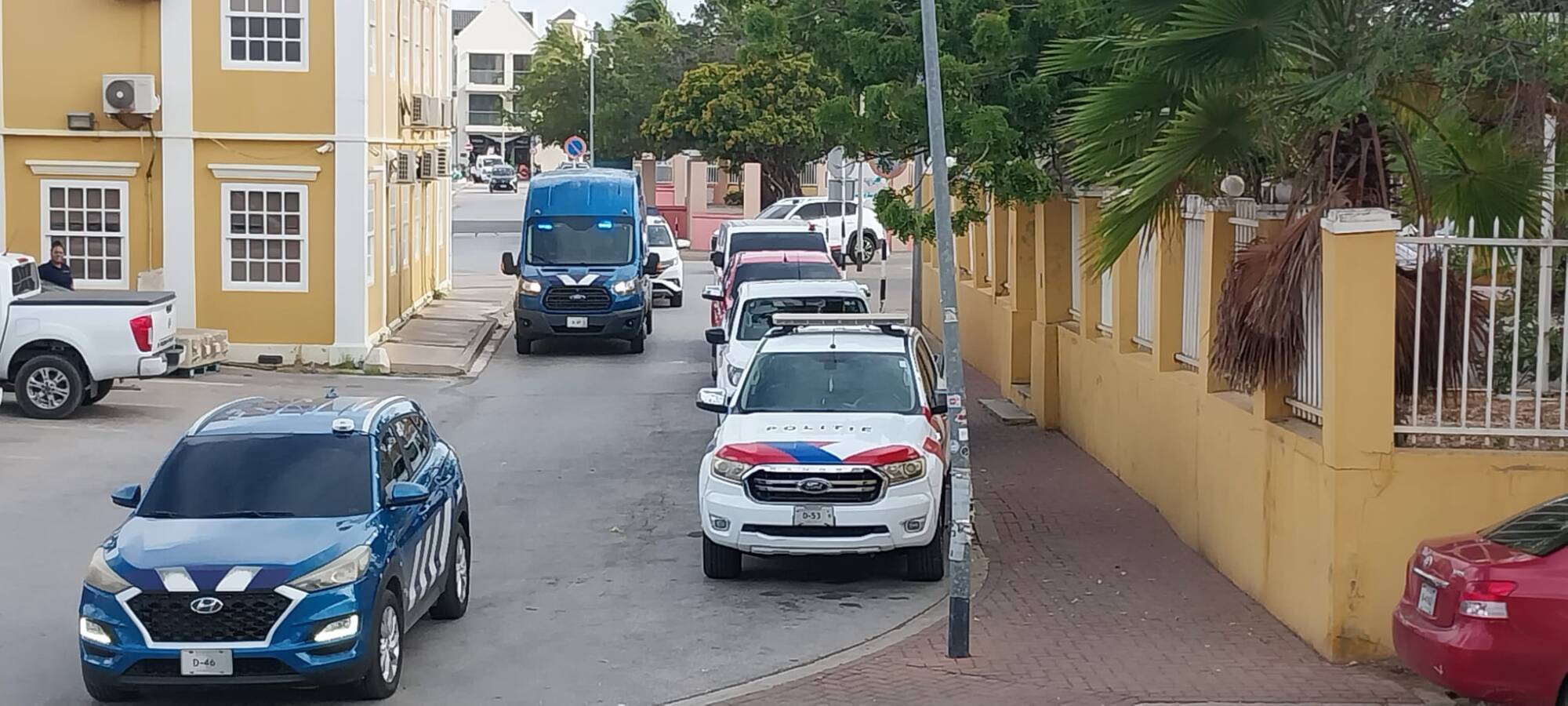
Monday, August 30, and Tuesday, August 31 the defense attorneys had the opportunity to react to the accusations and sentencing demands of the Public Prosecution Service on behalf of their clients. After that, it is up to the court. On October 27, a written verdict will be handed down in the ‘Galápagos’ case.