Soca has evolved into a universal language across the Caribbean, with each island and country bringing its own unique sound and cultural identity to the genre. One of the key figures helping to put Saba’s sound on the map is Saban born musician Jerome Matthew, better known as “Mister Kyat.”
Over the past two decades, Matthew has established himself as one of the go-to figures on Saba and across the region when it comes to music production, collaborating with local artists and helping shape the island’s distinctive sound. Matthew was honored by the local government in 2023 for his steadfast contribution to the music culture on Saba.
While Matthew is widely recognized as a producer and band member, now he is ready to bring his own music that is deeply personal to him into the spotlight, after years of keeping these creations tucked away in his secret vault.

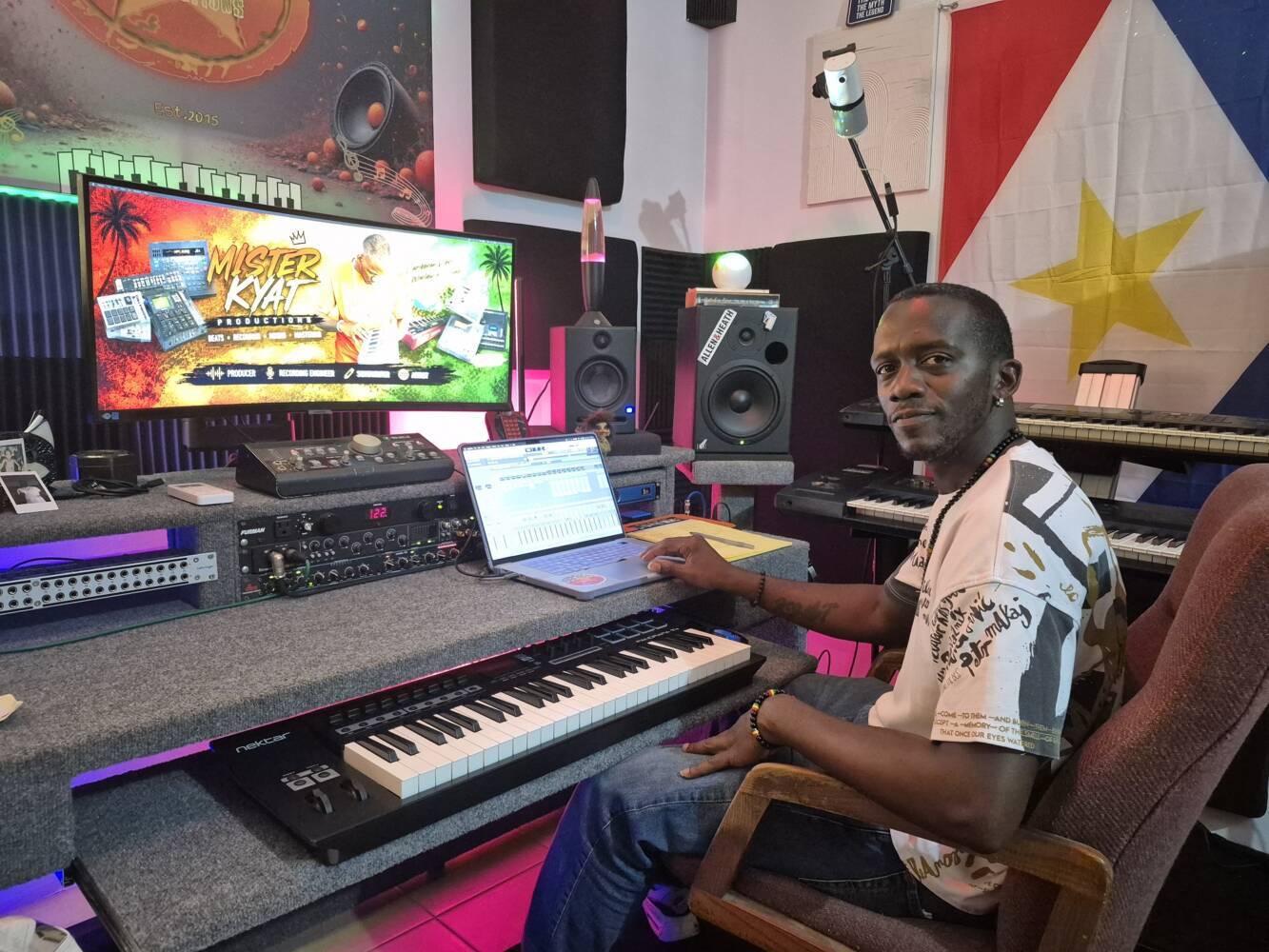
Jerome Matthew, better known as ‘Mister Kyat’. Photos Hazel Durand
Caribisch Netwerk met up with Matthew at his modern, professionally outfitted studio, a space that reflects the evolving and contemporary side of music production on Saba. There, he shared his journey to becoming one of Saba’s “local celebrities”. Matthew was essentially born into music, as the son of well-known bass player Roelof “Basses” Matthew. Growing up, he watched his father and other family members perform and began experimenting with musical instruments around four or five years old. By the age of eight to ten, he had become more seriously involved in music and was beginning to develop his own passion and identity as a musician.
St. Maarten
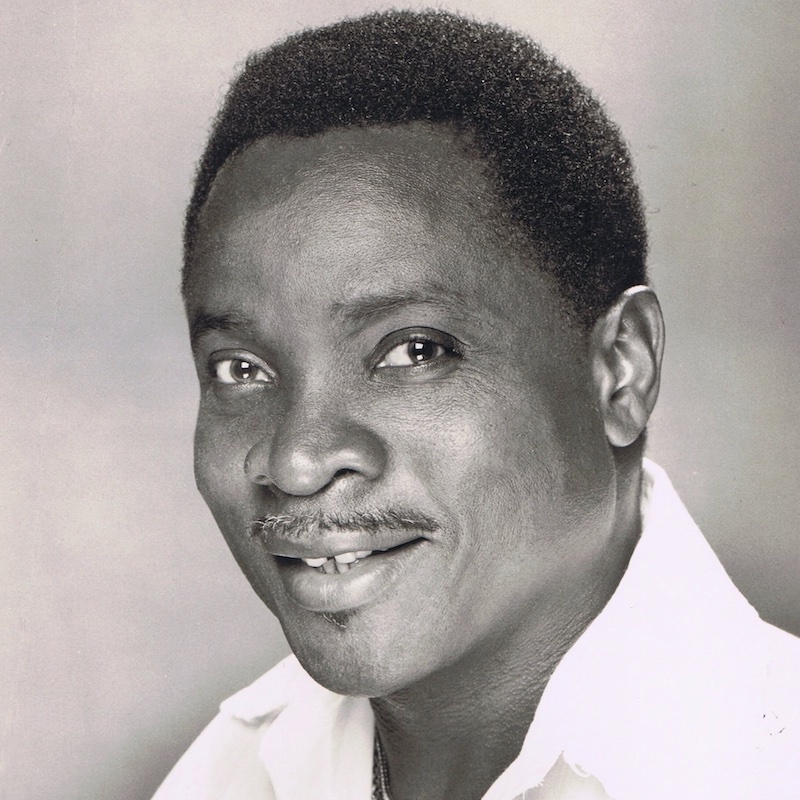
Matthew was particularly drawn to rhythm, beats and sound systems. Rather than receiving formal classical training, he taught himself to play keyboard and synthesizer. Having lived for some time on St. Maarten Jerome Matthew looked up to Calypso legends, such as “The Mighty Cat”, however he garnered the nickname “Mister Kyat”, from his ability to skillfully recreate and remake virtually any song, putting his own touch on the music while capturing its original sound.
In his earlier years, Matthew would often share poetry, lyrics, and songs with his sister, Saskia Matthew, who encouraged him to explore new sounds and experiment with different genres. That encouragement eventually led the siblings to form “The Verdict Crew” around 1999–2000, marking one of the early chapters in Matthews musical journey. Together with his sister they performed an original song “Rhythm Galore” and won the carnival road-march competition in 2000.
Between 2001 and 2002, Jerome Matthew traveled back and forth to St. Maarten, a place he considers his second home, where he worked alongside his father as an Assistant Producer and Recording Engineer at his father’s studio. During this time, he used his growing skills to help school choirs, rap groups, calypsonians, and other aspiring artists bring their musical ideas to life.

After graduating from high school in 2003, Jerome Matthew was determined to pursue a full- time career in music. “By this time, I had a whole book full of original songs and decided to record my own studio album, which I did at the disposal of my dad’s recording studio,” he recalled. Later that year, he released his first album “Bust Dem”, a nine-song compilation that he promoted as extensively as he could. The album was well received by the public and marked an important milestone in his music career.
In addition to producing his own music, Matthew joined members of the then “Destruction Band” that same year to form what would become the renowned “Entye Band”. His bands have always consisted largely of close cousins and friends, creating a strong sense of family and community around his music. Through performances beyond Saba and popular songs such as “Sexual Motion” and “Crank Dat Entyce Jam”, “Entye Band” helped showcase the talent, creativity, and musical energy emerging from the small Caribbean island of Saba.
What’s in store for “Mister Kyat”
Matthew shared that he has several unreleased songs, so he would like to become more consistent with releasing his music. Some ideas come to him in the middle of the night, forcing him to wake up and jot down lyrics, melodies, or rhythms before the inspiration fades.
A listener can expect to hear songs drawn from his relationships, personal experiences, emotions and his surroundings. He admits that he is shy to the attention and identity that comes with being “popular”, but he wants people to hear his music. Some of Matthews well-known bangers include “Tell me (I want to know)”, “Long Time” and “Ode 2 Carnival”, featuring “Lady Shorteh” from St. Eustatius.
Jerome Matthew has traditionally felt more comfortable behind the keyboard and in the production role. His work has included producing for Carnival performers, churches, community groups and artists both on and off the island. Reflecting on the time and effort he has put into helping musicians make their ideas a reality, he said he sees music as a passion rather than simply a source of income.
He explains that the amount of time, creativity and effort required to produce music is not always reflected in compensation, but he continues because creating music is personally fulfilling. He has a permanent government job, children and other responsibilities, but he embraces the challenge and continues to find a balance between his commitments and his passion for music. “My motto in life, even outside of music is that you got to keep going.”
 Watch on YouTube (opens in a new tab)
Encouraging young music talent
Despite Saba’s small size, he believes the island has significant musical potential. Matthew says he feels a responsibility to demonstrate what the island can produce musically. He actively encourages younger musicians and producers, because he sees them as important to the future of Saba’s music scene.
He has encouraged many youngsters including his own son to develop their musical abilities, helping to keep Saba’s music in circulation even after established figures eventually leave the scene. He reflected on the times when music was more widespread across the island, with numerous bands, calypsonians, steel bands, drum groups and church musicians.
Matthew feels the government can play a role in creating a long-term strategy for musical development on Saba, that combines funding, youth development, training, cultural exchange, infrastructure, tourism promotion, and networking opportunities so that local talent can grow and represent Saba internationally. He encouraged promoting local music and artists when marketing Saba.
Jerome Matthew said providing structured support for local artists, musicians, producers and other creatives would be more conducive, rather than offering occasional or one time funding. Individual artists currently must invest their own money into studios, equipment, rent, electricity, internet, maintenance, and other costs. He suggested Government support could help establish or sustain a local recording/creative studio that artists could use.
Saba does not currently have a music school, despite music being an important part of the island’s culture. Matthew suggested the government could organize music, singing, producing, and other creative workshops, either locally or in partnership with neighboring islands. He said Saba being part of the Dutch Caribbean it could make greater use of the cultural and music opportunities in the Netherlands.