“Break the cycle of violence.” That’s how attorney Marga van Lieshout opened her defense in the Galápagos case. Not with legal arguments, but with a poem. She spoke about the shock that the death of 15-year-old Clayshanou Domacassé caused in the community, and about the fear, anger, and unrest that have existed ever since that day. But according to Van Lieshout, the seriousness of an outcome should not automatically determine how someone views a suspect’s role. Each suspect must be judged individually, the defense told the court.
The three attorneys – Edward Winkel, Selvin Larmonie, and Marga van Lieshout – reached a similar conclusion, each coming from a different angle: the case file is extensive and the investigation was wide-ranging, but the prosecution cannot demonstrate concretely, for each individual suspect, who did what.
The case file contains more than 2,200 pages, and a long and intensive investigation was conducted over fourteen months. Ten relatively young suspects are being tried for their possible involvement in the events of June 8, 2025. The core of the defense attorneys’ argument: a lot of investigating was done, but that still hasn’t proven each suspect’s individual role.
A slim defendant in thick case
Standing before the court is a young defendant. Sixteen years old, but being tried in a case that revolves around a chaotic shooting and the death of 15-year-old Domacassé. According to the prosecution, J.W. fired the fatal shot. He himself denies this. At the end of his turn, he had one single message: “I did not kill Clayshanou. With all due respect, I want my freedom.”
For J.W., the prosecution is demanding one year of juvenile detention and two years of a PIJ measure — the maximum under Dutch juvenile criminal law. (PIJ stands for Plaatsing in een Inrichting voor Jeugdigen, or Placement in a Youth Institution, a measure aimed at providing treatment, which Dutch juvenile criminal law applies to young people who have committed a serious offense and have a psychological or developmental disorder — ed.) There is camera footage, but at the decisive moment the view is blocked. On top of that, shots were fired from multiple positions. That is why, according to the defense, the prosecution cannot prove that J.W. was the one who fired the fatal shot. For 19-year-old G.O., the stakes are also high. The prosecution is demanding 24 years in prison for him, as an accomplice. But according to the defense, there is not enough evidence to hold him responsible as an accomplice in Domacassé’s death.
The prosecution’s sentencing demands vary widely. They’re asking for 6 years in prison for M.S., 14 years for J.S., 16 years for C.D., 18 years for J.-M.W., and 18 years for O.C. For J.V.R., the demand is 36 months, for U.S. 30 months, and for Q.D.P. 36 months in prison. The charges differ per suspect and range from public violence to possession of a firearm and other acts of violence.
Not just the act, but also the youngster behind it
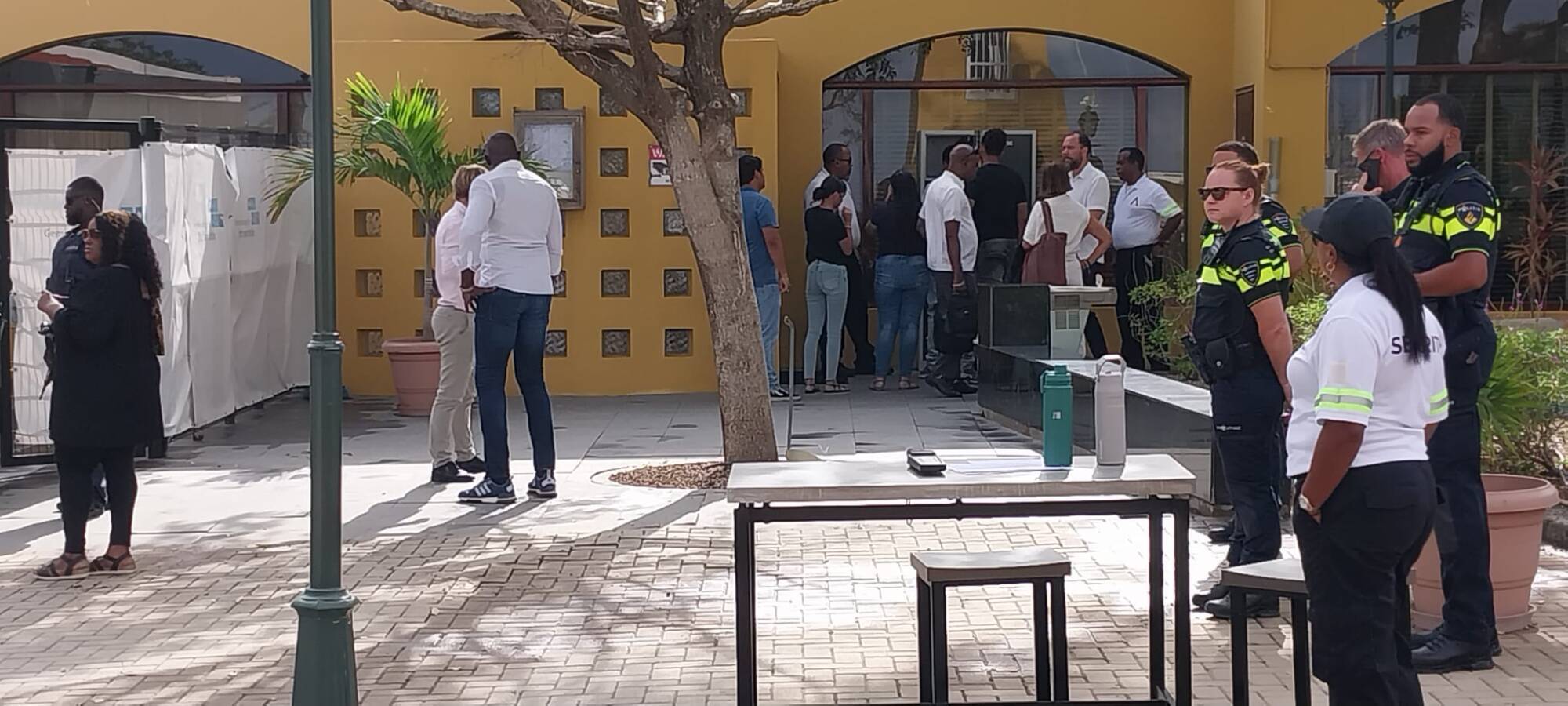
The scene in the courtroom is confronting. Ten relatively young suspects stand before a judge in a case that deeply shook the island. That is why the attorneys also devoted attention to another question: who are these young suspects, really? The defense did not paint a picture of ten suspects with the same background or the same way of functioning. On the contrary: for several suspects, the defense pointed to personal vulnerabilities, a mildly affected mental development or limited intellectual functioning, susceptibility to outside influence, difficulties with emotional regulation, and growing up in vulnerable circumstances.
According to the defense, these circumstances matter. They can be relevant to the question of how a young person functioned, what consequences of their choices they could have foreseen, and what kind of guidance is needed to prevent reoffending. For some suspects, behavioral experts describe in their reports a low or intellectually limited level of functioning. Some young people are also noted to have limited problem-solving skills, a heightened susceptibility to influence, or difficulties with emotional regulation.
The defense is asking the court to take these circumstances into account in its assessment and in the final sentencing. This is where a clear difference in approach emerges. Where the prosecution sees unconditional prison sentences as the answer, the defense sees room for treatment, guidance, and support for personal development.
The attorneys’ argument is straightforward: a prison sentence alone will not solve the problem. According to the defense, for young people who are vulnerable and susceptible to influence, treatment and guidance can do more good – for example, by learning to deal with emotions and building a stable life. That is why the question is not only what punishment is appropriate, but also what is needed to prevent these young people from continuing on a slippery slope and getting into trouble again.
The anonymous witness
One important point of contention is the statement of anonymous witness X. The prosecution considers this a key part of the case. The defense is challenging both the content of the statement and the ability to verify it. During the session, judge Eline Groenendaal made clear that not even the Prosecutor General knows who the witness is. The identity of X has been fully protected. According to attorney Larmonie, this limits the defense’s ability to investigate the witness’s background, their relationships, and any possible conflicts of interest.
‘Break the cycle’
Before presenting her defense, Van Lieshout also spoke with J.W.’s mother. According to the attorney, the punishment is not what matters most to her. What matters most to her is that it comes to light that her son did not shoot Domacassé. As long as people continue to believe that J.W. fired the fatal shot, the danger exists, according to Van Lieshout, that he will become a target for revenge. That way, the suspicion could become a new threat, she said. That is why her message went beyond this criminal case. If the goal is to break the cycle of violence, more needs to be done than just handing out punishment.
With that, the case ultimately comes down to two questions. What can the court legally declare proven? And what do these young suspects need in order not to fall into the same cycle again? The main hearing in the Galápagos case has concluded. The verdict will follow this October 27 – on evidence, guilt, and sentencing. But perhaps more importantly still: on the question of whether this case ends with revenge, or with a genuine attempt to break the cycle of violence.