In 2024, the Dutch government made €1 million available to Bonaire, St. Eustatius and Saba to support the development of individual climate plans. The initiative aims to help the islands prepare for the effects of climate change, protect their communities and strengthen their resilience to future environmental risks. Caribisch Netwerk spoke with Sarah van der Horn, Program Manager for the Nature and Environmental Policy Plan on Saba, about the island’s climate planning efforts.
“For Saba, we try to make the plan as holistic as possible because climate change affects everything,” Van der Horn explained. “It affects health because of rising temperatures, as well as our built environment, which we have to adapt to increasing heat, heavier rainfall and longer periods of drought,” she said.
Sarah van der Horn said she and her team welcomed the challenge of developing a climate plan specifically for Saba, recognizing that each island faces its own unique challenges. “The challenges are unique on each of the islands, so you can’t develop a climate plan that’s just for all the Caribbean islands.”
She said that Saba climate change will also affect the island’s natural environment, which in turn impacts its economy and potentially its cultural heritage. “Ladder Bay, for example, could be affected by rising sea levels. The biggest threats to Saba are not necessarily sea level rise, fortunately, but there are other climate-related risks we need to consider,” van der Horn explained.
The climate plans are intended to address several key priorities, including protecting people and infrastructure from climate-related hazards, safeguarding nature and biodiversity, strengthening water and food security, and supporting the transition to sustainable energy. Through these plans, each island aims to identify the measures needed to address its specific vulnerabilities and prepare for the long-term impacts of climate change. “So, we’ve each developed our own climate plan with support and collaboration from the ministries, but ultimately, as much as possible, we aimed for a bottom-up approach,” she explained.
The process began with broad consultation sessions across Saba, targeting specific groups, including elderly residents and school students, as well as the wider public. These consultations aimed to reach as many residents as possible and gather their perspectives on the climate risks facing the island and the solutions they believe could help address them.
Heavier rainfall
Van der Horn explained that past experiences, including hurricanes and the COVID-19 pandemic, have highlighted Saba’s vulnerability to disruptions in the import of essential supplies. Following hurricanes, the island has faced challenges with limited imports, while the pandemic brought difficulties in obtaining fresh produce.
“We do expect more droughts and heavy rainfall. Dry periods will become longer and are followed by shorter periods of heavier rainfall. Overall, we expect more extreme weather events that are going to have a big impact on the island,” she said.
She also noted that stronger hurricanes are projected. “Saba is pretty well prepared for strong hurricanes, and it’s been very quiet this year, but this is actually related to climate change as well, as we’re experiencing one of the most extreme El Niños ever recorded. For us luckily this led to fewer hurricanes this year. But it is expected that we will have stronger hurricanes in the future.”
Van der Horn said that while she is confident that Saba is generally well prepared for hurricanes due to hurricane resistant construction practices and the island having a strong crisis management team, there is always room for improvement. “We also have to make sure that we prepare for shorter response times, because we’ve seen hurricanes increase in strength in very short time frames,” she noted.
Food Supply
“Saba is a small island at the end of the supply chain, which means that if there is a disruption somewhere, we’re the first to notice. This is something that we have to be really vigilant with and we have to really understand this is a real risk for the island. That is why the climate plan focuses a lot on self-sufficiency,” van der Horn explained.
She noted that while a lot has already been done over the past years to increase the island’s electricity and water supplies, there is still room for improvement, especially when taking into account changing needs in light of climate change. Other essential supplies, such as food and medicine, must also be taken into consideration when planning for climate-related challenges.
“The climate plan includes a broad food security plan, which not only focuses on local food production and educating residents about agricultural practices, but even more on creating a larger buffer on the island that allows for bulk purchases and longer periods of availability.” This would ensure that Saba has sufficient food supplies available in the event that a ship is unable to reach the island for two to three weeks, or perhaps in the future even several months.
She explained that initiatives are developed in consultation with the local grocery stores and business community. “We consult with the grocery stores and businesses to understand their wishes, while also recognizing that as a public entity we have to serve the public, so we may at times have different goals than commercial parties,” she said.
She explained that the next step is to assess the island’s overall food storage needs and determine whether the commercial sector can meet those requirements. If a gap remains, additional storage space could be made available in consultation with local businesses, as they would ultimately make the greatest use of these facilities.
Vegetation recovery
Van der Horn said nature conservation is an important element and basic priority within the climate plan. She noted that phase one of the implementation of the Nature and Environmental Policy Plan was now being finalized. It focused on nature restoration and conservation, including efforts to address invasive species. An important first step was removing roaming grazers, which was essential to achieving the program’s broader nature conservation goals.
The project initially focused on erosion reduction and vegetation recovery by removing roaming goats, which were contributing to vegetation loss and soil erosion. Erosion is further intensified by heavy rainfall and can also negatively affect coral reefs. Removing grazing pressure made it possible to begin active vegetation restoration through reforestation. Both approaches have been implemented simultaneously, and residents have already noticed that the island is looking greener. A new vegetation assessment was recently conducted to measure the progress since the project began in 2020. The results are expected early next year.
Other initiatives include active coral reef restoration and promoting food security through sustainable, environmentally friendly local food production. The next phase, scheduled to begin next year, will focus on controlling other invasive species, strengthening biosecurity to prevent new invasives from entering the island, and improving rainwater management, which also ties into the island’s climate plan.
Development and climate change
Saba has several major development projects underway simultaneously, including the construction of the Black Rocks Harbour, the expansion of the elderly home, the reconstruction of the school gym, the expansion of school facilities and the development of a new solar park, to name a few. How do these developments fit within the island’s climate plan?
“Of course, development and construction inevitably have an impact on our environment, but the aim is to minimize that impact while recognizing that development is also necessary,” said van der Horn. She said sustainability is an important consideration in the island’s development. For the new harbor an environmental impact assessment was conducted, which resulted in measures to protect coral reefs in the area, including the relocating of corals. Included in the design of the new school facilities are natural shading green spaces and ventilation to help keep the building cool. “In the climate plan we focus on creating more shaded areas, but also to plant more trees in public spaces wherever we can, because vegetation helps to cool down any location.”
“We are also developing a Spatial Development Plan, which is crucial for protecting Saba’s natural environment in the long term,” she noted, explaining that spatial planning seeks to find a fair balance between different functions, activities and uses. Through spatial planning Saba could grow sustainably in a way that benefits the local population, the environment, and the local economy.
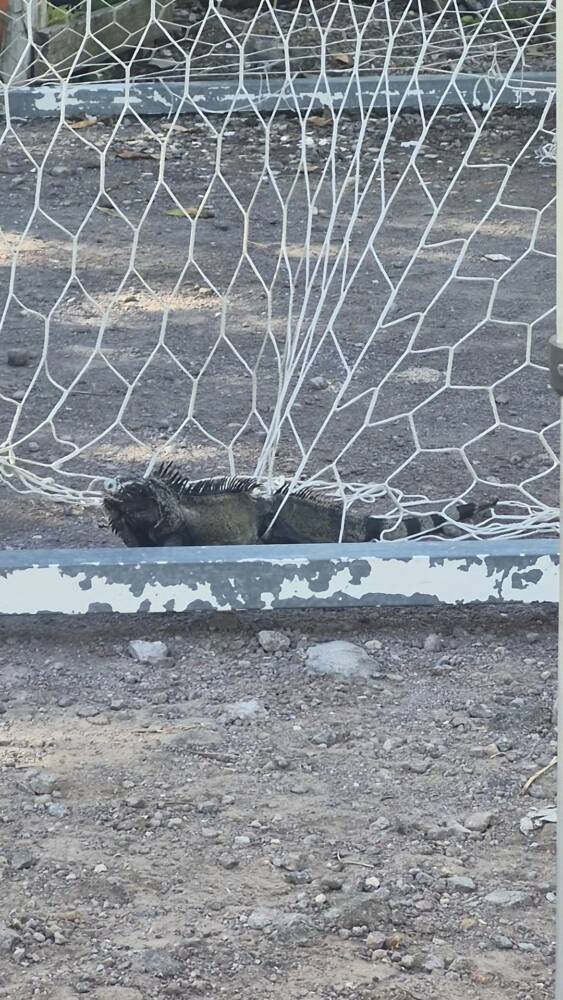
“Conservation must extend beyond the boundaries of nature parks to include important habitats, such as areas where iguanas’ nest. These habitats are also found outside protected areas, particularly in sandy locations. The area around the new harbor, for example, may contain important iguana habitats.”
She said mapping these key habitats will therefore be an important part of the second phase of the Nature and Environmental Policy Plan. The findings will be linked to the Spatial Development Plan to help ensure that such areas are considered in future development decisions.
Photo Caption:
“Conservation must extend beyond the boundaries of nature parks to include important habitats, such as areas where iguanas’ nest,” says Sarah van der Horn, Program Manager for the Nature and Environmental Policy Plan on Saba.